
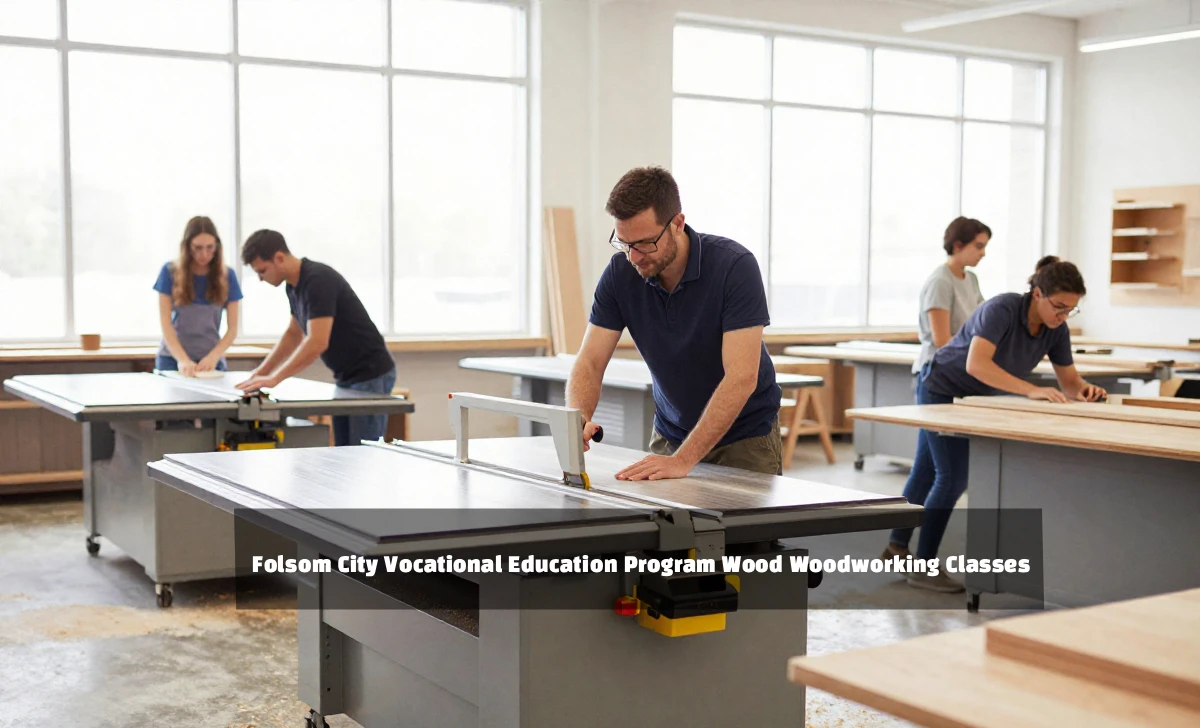
The Folsom City Vocational Education Program Wood Woodworking Classes provide hands-on training for all skill levels, covering essential techniques from basic tool safety to advanced furniture making. Students learn through project-based instruction in modern facilities with experienced instructors, preparing them for careers in carpentry, furniture design, and custom woodworking.
Why Choose Vocational Woodworking Training
Vocational education bridges the gap between classroom theory and real-world application. The Folsom City Vocational Education Program Wood Woodworking Classes deliver practical skills that employers actively seek. According to the U.S. Bureau of Labor Statistics, woodworkers earn a median annual salary of $36,710, with experienced craftspeople and specialized roles commanding significantly higher wages.
Traditional academic paths don’t always prepare you for hands-on trades. Vocational programs focus on doing rather than just learning about. Students spend their time in workshops, operating machinery, completing projects, and building portfolios that demonstrate their abilities to potential employers.
What You Learn in the Program
The curriculum covers three progressive skill levels. Beginners start with fundamentals: tool identification, safety protocols, wood selection, and basic cutting techniques. You’ll learn to operate hand tools like chisels and planes alongside power equipment such as table saws and routers.
Intermediate students tackle more complex projects. The Folsom City Vocational Education Program Wood Woodworking Classes teach joinery methods including dovetails, mortise-and-tenon joints, and box joints. You’ll work on cabinetry construction, learn proper finishing techniques, and develop skills in project planning and blueprint reading.
Advanced courses push your capabilities further. Students design and build custom furniture, work with specialty woods, master CNC machinery, and explore woodturning. The program emphasizes precision work where measurements matter to 1/1000 of an inch.
Core Skills Development
Safety comes first in every class. Students master proper equipment handling, understand workshop hazards, and learn emergency procedures. This foundation protects you throughout your woodworking career.
Wood identification and selection form another critical component. Different species have distinct properties. Oak provides durability for structural pieces. Pine works well for beginners due to its softness. Walnut offers rich color for fine furniture. The Folsom City Vocational Education Program Wood Woodworking Classes teach you to match wood types to project requirements.
Project execution combines all learned skills. You’ll move from simple cutting boards to complex cabinets. Each project builds confidence and adds to your portfolio. Instructors provide feedback throughout, helping you refine techniques and solve problems.
Program Structure and Facilities
Classes meet in well-equipped workshops featuring professional-grade tools. The facilities include table saws, band saws, drill presses, jointers, planers, and sanders. Students access CNC routers for precision work and dust collection systems for safe operation.
Class sizes remain small to ensure individual attention. Instructors work directly with students, demonstrating techniques and providing hands-on guidance. This personalized approach helps everyone progress at their own pace while maintaining high standards.
The Folsom City Vocational Education Program Wood Woodworking Classes operate on a semester system with enrollment twice yearly. Day and evening sessions accommodate different schedules. Weekend workshops provide additional learning opportunities.
Career Opportunities After Graduation
Vocational woodworking training opens multiple career paths. Graduates find work as cabinetmakers, furniture makers, finish carpenters, and architectural millworkers. Some start their own custom woodworking businesses. Others join manufacturing companies that produce wood products at scale.
The construction industry consistently needs skilled woodworkers. Residential and commercial projects require carpenters who can read blueprints, work precisely, and complete tasks efficiently. Vocational training provides exactly these capabilities.
Starting salaries for entry-level woodworkers range from $28,000 to $35,000 annually. With experience, earnings increase substantially. Specialized roles like CNC operators, furniture designers, and restoration specialists earn $45,000 to $65,000 or more. Self-employed craftspeople set their own rates based on project complexity and market demand.
Community Impact and Projects
The program extends beyond individual student success. Collaborative community projects give students real-world experience while benefiting local organizations. Past projects include park benches for schools, playground equipment, and custom furniture for nonprofits.
These community engagements teach project management, client communication, and deadline management. Students learn to work as teams, coordinate tasks, and deliver quality results under actual project constraints.
Local exhibitions showcase student work. These events connect emerging craftspeople with potential clients and employers. They also celebrate achievements and inspire continued growth within the woodworking community.
How to Enroll
Starting your journey requires a simple enrollment process. Visit the program website or contact the vocational education office for current schedules and fees. Application forms collect basic information and help match you with appropriate class levels.
Financial aid options exist for qualifying students. Scholarships, payment plans, and workforce development grants can reduce costs. The investment in vocational training typically pays returns quickly through employment opportunities.
Prerequisites are minimal. The Folsom City Vocational Education Program Wood Woodworking Classes welcome complete beginners with no prior experience. A high school diploma or equivalent is typically required. Physical capability to stand for extended periods and lift materials up to 50 pounds ensures you can participate fully.
Comparison: Vocational Training vs. Self-Teaching
| Aspect | Vocational Program | Self-Teaching |
|---|---|---|
| Equipment Access | Professional-grade tools provided | Must purchase all equipment |
| Learning Speed | Structured progression with expert guidance | Trial-and-error approach, slower progress |
| Safety Training | Comprehensive protocols taught | Must research independently |
| Networking | Connect with instructors, peers, and employers | Limited professional connections |
| Portfolio Building | Guided projects with feedback | Self-directed with no validation |
| Cost Over Time | Tuition investment with quick returns | Equipment costs accumulate gradually |
| Job Readiness | Employer-recognized certification | Skills must be proven case-by-case basis |
Student Success Stories
Program graduates work in diverse roles across California. Some establish custom furniture businesses serving residential clients. Others join architectural millwork companies, creating high-end installations. Many transition from unrelated fields into satisfying woodworking careers.
Career changers particularly benefit from vocational training. The hands-on approach suits people who prefer making things to desk work. Retirees discover that woodworking offers creative outlets and income opportunities. Young adults find stable employment in growing industries.
Frequently Asked Questions
How long does the program take to complete?
Basic courses run 8-12 weeks, intermediate levels take 12-16 weeks, and advanced training extends to 20+ weeks depending on specialization.
Do I need my own tools to start?
No. The program provides all necessary tools and materials. Students can bring personal tools if preferred, but it’s not required.
Can I take classes while working full-time?
Yes. Evening and weekend options accommodate various schedules, making the Folsom City Vocational Education Program Wood Woodworking Classes accessible to working adults.
What’s the job placement rate?
While specific rates vary, vocational programs generally see strong employment outcomes due to practical skills training and industry connections that instructors maintain.
Are classes suitable for complete beginners?
Absolutely. The curriculum starts with fundamental concepts and builds progressively. No prior woodworking experience is necessary.
The Value of Hands-On Learning
Digital tutorials and online videos provide information, but they can’t replace physical practice with real materials and tools. The Folsom City Vocational Education Program Wood Woodworking Classes give you supervised experience with professional equipment. You make mistakes in a safe environment where instructors help you learn from them.
Tactile skills develop through repetition and feedback. Knowing how wood feels as you cut it, understanding when a blade needs sharpening, sensing when joints fit properly—these capabilities come from doing, not watching. Vocational training accelerates this development through concentrated practice.
Mentorship matters. Experienced instructors share insights that take years to discover independently. They spot issues before they become problems, suggest better approaches, and teach industry shortcuts. This knowledge transfer represents one of vocational education’s greatest values.
Making Your Decision
Choosing vocational training represents an investment in your future. Consider your goals: career change, hobby development, skill enhancement, or business launch. The Folsom City Vocational Education Program Wood Woodworking Classes accommodate all these objectives through flexible programming and comprehensive instruction.
Research class schedules, visit the facilities if possible, and speak with current students or graduates. Understanding the program’s culture and approach helps you commit confidently. Most successful students share one trait: they show up consistently and engage fully with the learning process.
Woodworking combines creativity with technical skill. It offers tangible results, personal satisfaction, and practical career opportunities. Vocational education provides the fastest, most effective path to competency in this timeless craft.
