
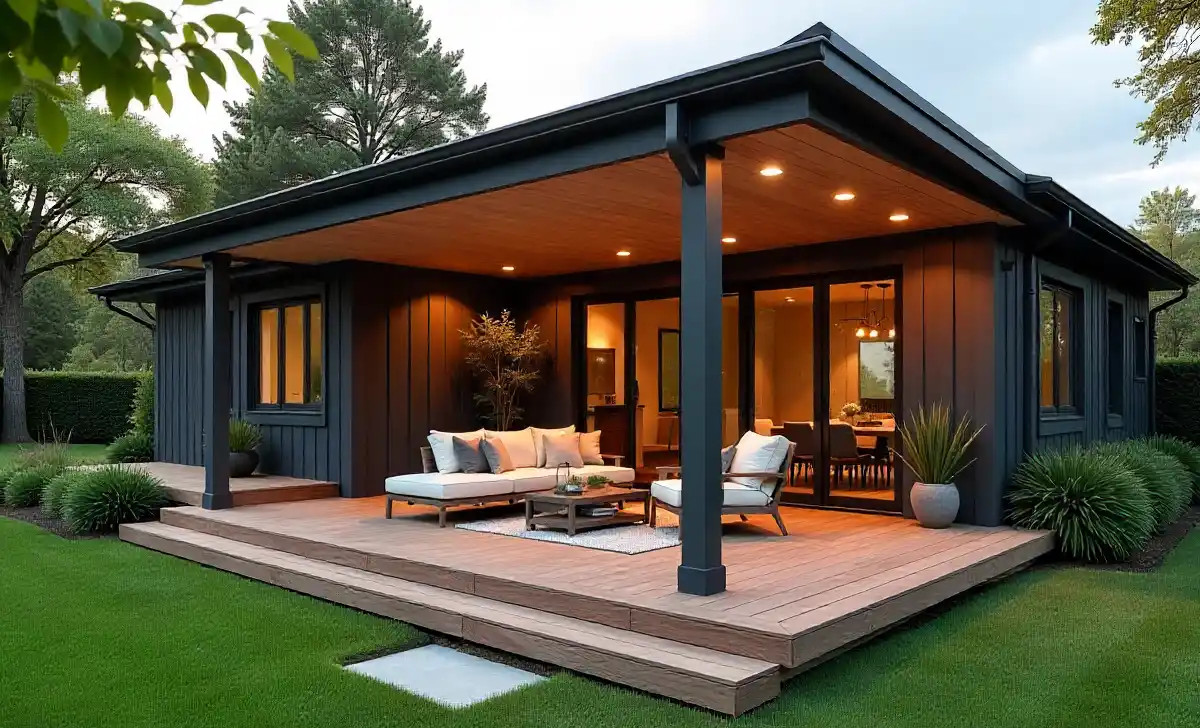
Attached covered patio ideas include gable roof designs, pergola structures, outdoor kitchens, and entertainment spaces. These additions cost $10,000-$22,500 on average, add 50-80% to your home’s value, and extend your living area with year-round weather protection.
What Makes an Attached Covered Patio Worth Building
An attached covered patio connects directly to your home, creating a seamless indoor-outdoor transition. The structure features a permanent roof that shields you from the sun and rain while expanding your usable living space.
This addition serves multiple purposes. You get weather protection for furniture and guests. You gain a functional area for dining, cooking, or relaxation. You increase your property’s market value by thousands of dollars.
The national average cost ranges from $10,000 to $22,500 for a 200-square-foot space. Your final price depends on materials, design complexity, and local labor rates. Basic structures with simple roofs cost less. Premium builds with custom features and high-end materials cost more.
Roof Styles That Define Your Space
Your roof choice shapes both function and appearance. Each style offers distinct benefits.
Gable Roof Design This triangular structure provides excellent water drainage and creates an open, airy feel. The peaked ceiling matches traditional home architecture. Installation requires proper attachment to your house exterior and support posts anchored in concrete footings.
Hip Roof Configuration: Slopes on all four sides offer superior wind resistance. This design works well in areas with severe weather. The sophisticated look complements homes with existing hip roofs.
Flat Roof Optio: Contemporary homes benefit from this clean, modern look. Construction costs remain lower than sloped alternatives. The simple design works well for rooftop access or additional features.
Lean-To Structure: A single slope extends from your house wall. This practical choice fits narrow spaces and tight budgets. Water drains efficiently away from your home.
Pergola Framework Open rafters balance shade with natural light. The geometric pattern supports climbing plants for an organic atmosphere. This popular choice costs $1,450 to $5,750 for prefabricated models.
Functional Spaces You Can Create
Smartly attached covered patios transform empty areas into purposeful zones.
Outdoor Kitchen Setup: Install a built-in grill, prep counter, and storage cabinets. Add a small refrigerator for convenience. Include bar seating and a dining table for complete functionality. This setup costs $5,500 to $22,00,0, depending on appliances and finishes.
Entertainment Zone: Mount a weatherproof TV and sound system. Add comfortable seating with weather-resistant cushions. Install ambient lighting for evening gatherings. A fire pit creates warmth and focal interest.
Dining Area: A Place with a large table with chairs for family meals. Hang string lights or pendant fixtures overhead. Keep the grill nearby for easy cooking access. This simple arrangement requires minimal investment but delivers maximum use.
Home Office Extension: Create a quiet workspace with weatherproof furniture. Install electrical outlets for laptops and devices. Position away from high-traffic areas. This trend gained popularity after remote work became standard.
Relaxation Retreat: Add a hot tub or spa for year-round enjoyment. Include mood lighting and privacy screens. Soft seating completes the spa atmosphere. Budget an additional $2,000-$35,000 for hot tub installation.
Material Choices and Their Trade-Offs
Your material selection impacts appearance, durability, and maintenance requirements.
Aluminum offers lightweight strength with minimal upkeep. The powder-coated finish resists fading and requires only occasional washing. Cost runs $12-$18 per square foot for DIY kits.
Wood delivers natural beauty and traditional appeal. Cedar and redwood resist rot naturally. Expect to seal and stain every 2-3 years. Material costs reach $27-$42 per square foot.
Vinyl provides weather resistance at lower prices. Installation goes quickly. The material won’t rot or require painting. Durability varies by quality grade.
Composite materials combine wood fibers with plastic. This blend resists moisture, insects, and decay. Maintenance stays minimal. Prices fall between vinyl and natural wood.
Cost Breakdown for 2025
Understanding expenses helps you budget accurately.
Basic Coverage (200-300 sq ft)
- Simple roof structure: $3,000-$8,000
- Basic amenities included: $5,000-$10,000
- Electrical work added: $2,000-$4,000 extra
Premium Features
- High-end materials: $10,000-$25,000
- Outdoor kitchen included: $15,000-$35,000
- Luxury installations: $20,000-$50,000
Labor typically represents 20-30% of total costs. Materials account for 50-60%. The remaining percentage covers permits, inspections, and site preparation.
Professional installation adds $7-$11 per square foot. This investment ensures code compliance and structural integrity. Mistakes in DIY projects often cost more to repair than hiring experts initially.
Size Planning Based on Use
Match your patio dimensions to intended activities.
A minimum of 100 square feet accommodates basic seating. This size fits a small table with chairs for casual meals.
Expand to 200-300 square feet for dining and entertaining multiple guests. This range allows furniture groupings plus walking space.
Maintain 3 feet of clearance around all furniture. Account for traffic flow between seating areas and house entry points.
Larger patios (300+ square feet) support multiple zones. You can combine dining, lounging, and cooking areas in one space.
Climate Considerations
Your location dictates specific design needs.
Rainy regions require full coverage with proper drainage systems. Gutters prevent water from pooling near the foundation. Sloped roofs channel runoff away from the patio.
Sunny climates benefit from adjustable shade options. Louvered roofs open for breezes and close for sun protection. UV-resistant materials prevent fading and degradation.
Windy areas need reinforced structures. Hip roofs perform better than flat designs. Secure furniture and decorative items to prevent damage.
Cold weather zones should include heating options. Outdoor fireplaces, infrared heaters, or enclosed walls extend seasonal use. Insulated roof panels reduce heat loss.
Permit and Code Requirements
Most municipalities require permits for attached structures. The process protects your investment and ensures safety.
Submit detailed plans showing dimensions, materials, and structural details. Include information about electrical and plumbing work. Schedule inspections at required construction phases.
Permit costs range from $150-$600 for standard projects. Complex designs may require engineering approval, increasing fees to $1,400 or more.
HOA architectural reviews add $50-$250 in fees. Check restrictions before finalizing your design. Some associations limit colors, materials, or overall size.
Building codes specify minimum distances from property lines. They also mandate proper footings, beam sizes, and attachment methods. Non-compliance creates liability and resale problems.
Maintenance for Long-Term Value
Regular care extends your patio’s lifespan.
Monthly Tasks: Sweep surfaces to remove debris. Check hardware for loose bolts or screws. Clear gutters and drainage areas. Inspect for weather damage or wear.
Seasonal Tasks
Power wash surfaces in spring and fall. Check caulking around attachment points. Trim vegetation away from the structure. Test drainage during heavy rain.
Annual Tasks: Inspect roof condition thoroughly. Check structural components for damage. Update protective coatings on wood or metal. Service electrical components and fixtures.
Wood structures need restaining every 2-3 years. Metal components may require touch-up paint. Fabric elements need replacement every 5-7 years, depending on exposure.
Value Addition to Your Property
Attached covered patio ideas deliver measurable returns.
Quality installations add 50-80% of construction costs to home value. A $15,000 patio could increase the sale price by $7,500-$12,000. Location and design quality affect exact returns.
These structures rank in the top five desired features among homebuyers. 82% of buyers consider patios desirable or essential. This demand translates to faster sales and stronger offers.
Functional outdoor space appeals to buyers seeking expanded living areas. Well-maintained patios show pride of ownership. Professional photos highlight this feature in listings.
Design Tips for Maximum Appeal
Smart choices create spaces you’ll actually use.
Match your patio style to your home’s architecture. Contemporary houses suit clean lines and minimal details. Traditional homes benefit from classic features and decorative trim.
Select colors that complement your exterior. Neutral tones work with any palette. Bold choices make statements but may limit future flexibility.
Layer lighting for versatility. Overhead fixtures provide task lighting. String lights add ambiance. Spotlights highlight architectural features or landscaping.
Incorporate storage solutions. Built-in benches with lift tops hide cushions and supplies. Cabinets keep grilling tools organized. Hidden storage maintains a clean appearance.
Add personality with decor and plants. Outdoor rugs define seating areas. Potted plants soften hard surfaces. Throw pillows introduce color and comfort.
Frequently Asked Questions
What’s the difference between attached and freestanding covered patios?
Attached patios connect directly to your home with shared walls or rooflines. Freestanding structures stand independently in your yard. Attached designs cost less and integrate better with the existing architecture.
Do I need footings for an attached covered patio?
Yes. Support posts require concrete footings to prevent settling and ensure stability. Frost lines in your area determine the minimum depth. Local codes specify exact requirements.
Can I build an attached covered patio myself?
Simple pergola designs work for experienced DIYers. Structures with electrical, complex roofs, or permanent attachments need professional installation. Code violations create liability and resale issues.
How long does construction take?
Basic installations take 3-7 days. Custom designs with multiple features need 2-3 weeks. Weather delays and permit processing extend timelines.
Will a covered patio affect my property taxes?
Yes. Permanent structures increase assessed value. Tax impact varies by location. Check with your local assessor for specific information.
