
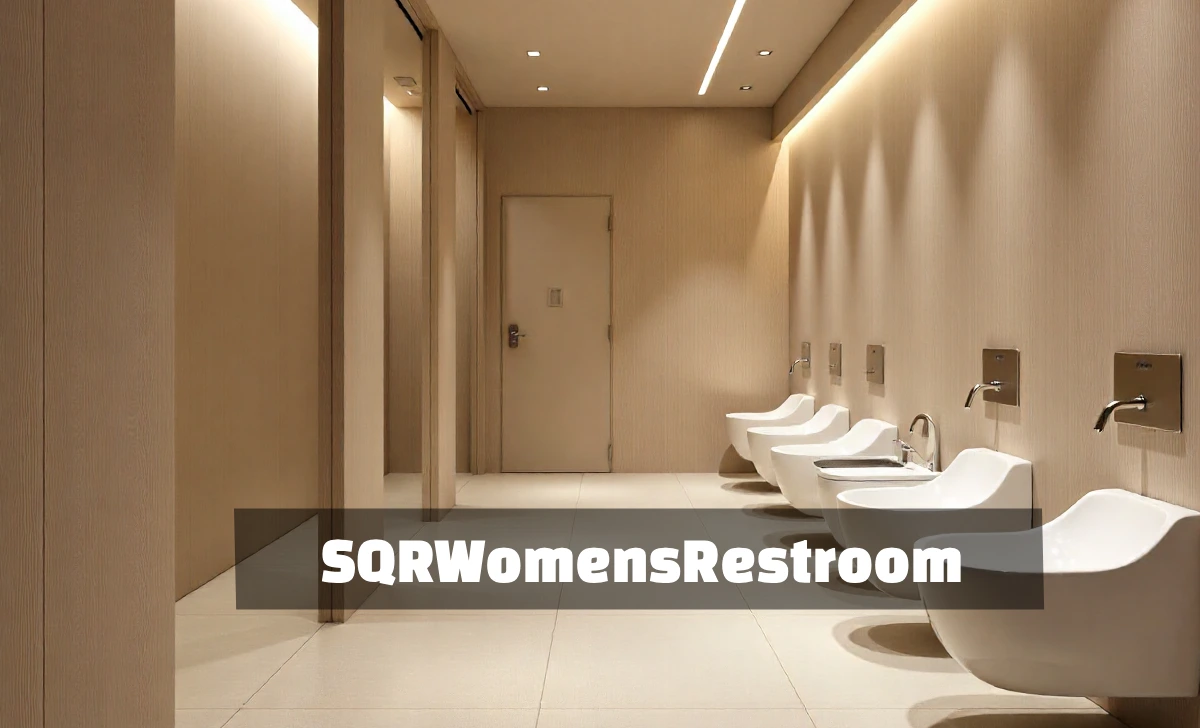
SQRWomensRestroom represents both a digital location tag for women’s restrooms in public squares and a design concept prioritizing privacy, accessibility, hygiene, and smart technology in women’s facilities through modern architectural planning.
What Is SQRWomensRestroom?
The term SQRWomensRestroom appears across digital mapping platforms, facility management systems, and architectural discussions. At its core, this identifier serves two distinct purposes.
First, it functions as a compressed data notation in geographic information systems. When you search for a restroom on your phone, the app queries databases containing standardized tags like “sqrwomensrestroom” with associated coordinates and accessibility features. The system translates this into user-friendly text while keeping the underlying data abbreviated for computational efficiency.
Second, SQRWomensRestroom has become shorthand for modern women’s restroom design. The acronym represents three core principles: Safe, Quality, and Reliable spaces. This design philosophy addresses longstanding issues in public facilities through architectural innovation, smart technology, and user-centered planning.
The structure breaks down simply. “Sqr” abbreviates “square,” referring to public plazas, town squares, or mall courtyards. “Women’s” indicates the space is specifically designated for women. “Restroom” identifies the facility type. Combined, the term most directly translates to women’s restrooms located in or near public spaces.
Why Traditional Women’s Restrooms Create Problems
Women face specific challenges in public restrooms that men typically don’t encounter. Research from Ghent University found that women spend 90 seconds in restrooms compared to 60 seconds for men. This time difference creates capacity disparities even when facilities appear equal in size.
Three main factors explain the persistent problem. First, the net number of toilets for women is smaller than for men because toilet stalls take up more space than urinals. An average restroom area can accommodate 20 to 30 percent more fixtures for men when the same floor space is divided equally.
Second, women spend one and a half to two times as long using facilities due to practical reasons. Stall doors must be opened and closed, toilet seats need cleaning, and more clothing requires removal. These tasks add up.
Third, busy periods amplify these issues. During peak times at airports, concerts, or shopping centers, women face wait times exceeding six minutes while men’s rooms remain accessible. Studies show that losing just one toilet space can increase wait time by 172 percent.
Traditional designs also compromise privacy. Standard American stalls feature visible gaps at the top and bottom, creating discomfort and security concerns. Poor lighting raises safety issues. Inadequate accessibility features exclude people with disabilities, elderly users, and parents with children.
Core Design Principles of SQRWomensRestroom
Modern SQRWomensrestroom concepts address these failures through specific design strategies.
Privacy comes first. Floor-to-ceiling partitions eliminate visibility gaps. Soundproof materials reduce noise transmission between stalls. Secure locks include occupancy indicators. These elements create private, comfortable spaces rather than exposed cubicles.
Accessibility must be universal. Wide doorways accommodate wheelchairs. Spacious stalls provide maneuvering room for mobility aids. Grab bars are positioned at appropriate heights. Adjustable fixtures serve users of different abilities. Research indicates that 75 percent of users with disabilities find modern facilities significantly easier to access than conventional designs.
Hygiene drives technology integration. Touchless faucets reduce surface contact. Motion-activated soap dispensers and flush mechanisms minimize pathogen transmission. Advanced sensor technology ensures reliable activation. Automated cleaning systems maintain standards between scheduled maintenance visits.
Capacity planning considers actual usage patterns. Facilities need one and a half to two female toilets for each male toilet to achieve comparable waiting times. Optimal layouts incorporate at least five to seven stalls rather than the minimum required by code. Real-time occupancy tracking through mobile apps helps users avoid congested facilities during peak times.
Safety features are integrated throughout. Well-lit spaces with smart sensors eliminate dark corners. Emergency call buttons connect to security systems. Secure entry controls in high-traffic locations prevent unauthorized access. Clear sightlines from entry points allow staff monitoring without compromising user privacy.
Smart Technology in Modern Restrooms
Technology transforms how restrooms function and are maintained. IoT-enabled devices detect when restrooms need cleaning and alert maintenance staff about issues immediately. Sensors monitor soap and paper towel levels, sending alerts when supplies run low. This ensures facilities remain well-stocked and functional.
Smart toilets include antibacterial coatings that prevent germ growth. Self-cleaning capabilities ensure toilets are ready for the next user. Water efficiency systems cut down on waste. Dual-flush touchless actuators can decrease water usage per flush by 30 to 40 percent.
Touchless fixtures are now standard in modern designs. Automatic faucets provide temperature precision to prevent scalding and promote energy conservation. Studies show that municipalities implementing touchless systems report 40 percent reductions in illness related to restroom use.
Mobile connectivity allows users to check stall availability or cleanliness ratings through apps before arriving. Digital monitoring tracks usage patterns, helping facility managers schedule maintenance efficiently. Feedback systems let visitors rate hygiene and safety, ensuring accountability.
ADA Compliance and Legal Requirements
The Americans with Disabilities Act sets minimum accessibility standards for public restrooms. Facilities must provide at least one wheelchair-accessible stall in multi-user restrooms. If six or more fixtures exist, at least one ambulatory-accessible compartment is required.
Specific dimensions are mandated. Accessible stalls must be at least 60 inches wide and 60 inches deep to allow wheelchair turning space. Door clearance must be 32 inches minimum when open at 90 degrees. Toilets must be positioned 16 to 18 inches from the side wall, with seats 17 to 19 inches above the floor.
Grab bars are required in all accessible stalls. Side wall grab bars should be at least 42 inches long. All grab bars must be installed horizontally 33 to 36 inches above the finished floor. They must sustain at least 250 pounds of force.
Sink requirements specify maximum heights of 34 inches from the floor. Knee clearance of 27 by 30 inches wide and 11 to 25 inches deep must be provided underneath. Faucets, soap dispensers, and hand dryers must operate with one hand and require no more than five pounds of force.
Beyond federal requirements, some states mandate additional features. California, Washington, and New York require free menstrual products in public restrooms. Progressive building codes now require fixture equity, ensuring equal counts between male and female facilities.
Frequently Asked Questions
What does SQRWomensRestroom mean?
It refers to women’s restrooms in public squares or facilities designed with modern standards for safety, quality, and reliability.
Why do women’s restrooms have longer wait times?
Women spend 50 percent more time in restrooms due to stall requirements, clothing, and hygiene needs. Equal fixture counts create unequal capacity.
What makes a restroom ADA-compliant?
It must have accessible stalls measuring 60×60 inches, grab bars, sinks at 34 inches maximum height, and touchless or easy-to-operate fixtures.
How do smart restrooms improve hygiene?
Touchless fixtures, automated cleaning, air purification, and real-time monitoring reduce surface contact and maintain cleanliness standards consistently.
What is the recommended ratio of female to male toilets?
Experts recommend 1.5 to 2 female toilets for each male toilet to achieve comparable wait times and user satisfaction.
