
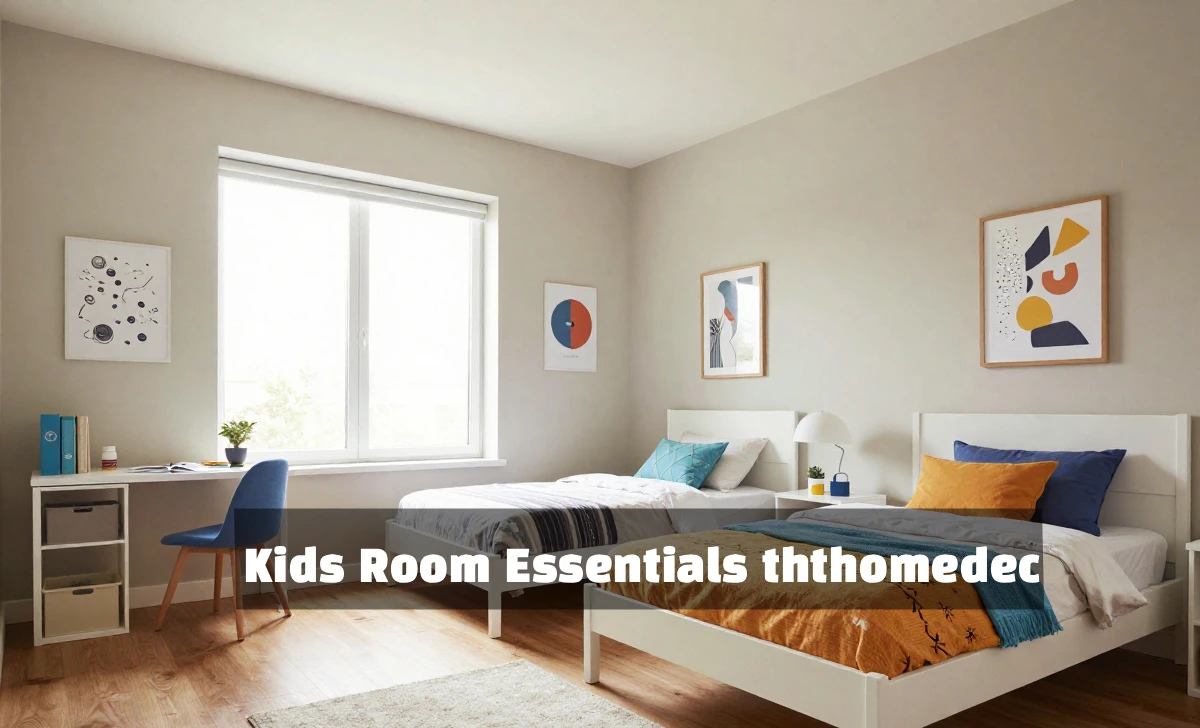
Kids Room Essentials ththomedec provide the foundation for creating functional, safe spaces where children can sleep, play, and develop. These core elements include quality beds, smart storage, study areas, and age-appropriate furniture that adapts as your child grows.
Setting up a child’s bedroom feels overwhelming. You want a space that works today but won’t need a complete overhaul next year. The right essentials solve this problem by offering flexibility while supporting your child’s development through different life stages.
Why Your Child’s Bedroom Design Matters
Your child spends nearly half their life in their bedroom. This space directly affects how they sleep, play, learn, and grow. Research shows the environment shapes child development. Well-designed rooms boost creativity, improve focus, and build confidence.
The global kids furniture market reached $36.5 billion in 2024, growing at 7.6% annually through 2034. Parents now prioritize spaces that support their children’s development rather than just filling rooms with furniture. Bedroom furniture alone generated $13.8 billion in 2024, expected to reach $27.8 billion by 2034.
Modern families need rooms that work harder. You need storage to handle the toy explosion. You need furniture lasting beyond next year’s growth spurt. You need designs that don’t require full renovation when interests change.
The Bed: Foundation of Every Kid’s Room
A quality bed forms the core of any child’s space. Your child needs proper sleep to grow, learn, and stay healthy. The wrong bed affects sleep quality, which impacts everything else.
Twin beds work for most single-child rooms and fit standard bedding. Bunk beds maximize floor space and add excitement for siblings sharing rooms. Loft beds create study or play areas underneath. Convertible beds adjust as your child grows from toddler to teen.
Your mattress choice matters just as much. Medium-firm mattresses with individual spring support work best for growing bodies. They provide proper spine alignment without being too soft or too hard.
Pair your bed with breathable, hypoallergenic bedding. Organic cotton and bamboo fabrics feel soft, wash easily, and avoid irritating sensitive skin. Bold patterns featuring animals, geometric designs, or space themes add personality without overwhelming the room.
Storage Solutions That Children Actually Use
Storage makes or breaks a kid’s room. Without proper organization, toys and clothes take over every surface. With the right system, cleanup becomes manageable even for young children.
Open shelves work for books and display items that your child can reach independently. Labeled bins and baskets turn cleanup into a simple matching game. Toy chests with safety hinges prevent finger pinching. Dressers and closet organizers teach clothing care habits.
The key is making storage accessible. Your four-year-old won’t put toys away if bins sit on high shelves. Your seven-year-old won’t hang up clothes if the rod is too tall to reach.
Kids Room Essentials ththomedec designs storage at child-appropriate heights. This teaches organization skills while keeping rooms tidy. Consider modular storage that adjusts over time. Stackable bins work for toddler toys, then hold art supplies, then organize school materials.
Study Areas That Support Learning
Every child needs a dedicated space for homework, reading, and creative projects. A proper study area helps them focus and build good learning habits.
Your study corner requires three elements. First, an ergonomic desk and chair sized correctly for your child. Too high or too low causes poor posture and discomfort. Second, adequate lighting from desk lamps or positioned near windows. Poor lighting strains eyes and reduces concentration. Third, organized supply storage with drawers or desktop organizers.
The 2024 shift to remote learning increased demand for home study furniture. Families realized children need proper workspaces, not just kitchen table spots.
Start simple for younger children. A small table with crayons and paper encourages creativity. Add complexity as they grow. Older kids need larger desks, better lighting, and more storage for books and supplies.
Play Spaces That Spark Imagination
Play space is where your child’s creativity comes alive. This area should feel separate from sleep and study zones, even in small rooms.
Soft rugs or mats provide comfortable, safe play surfaces. Age-appropriate furniture like kid-sized tables and chairs fit their proportions. Reading nooks with cushions, bean bags, or floor pillows create cozy corners. Open floor space allows building, dancing, or imaginative play.
Design trends for 2025 emphasize themed spaces. Fantasy-inspired furniture, space-themed decor, and nature motifs appear in top-selling collections. These themes spark imagination while remaining functional.
Balance is key. Too many toys overwhelm children and make cleanup impossible. Rotate toys seasonally to keep things fresh without cluttering the room.
Safety Features You Cannot Skip
Child safety ranks as the top priority for any kids’ room. Furniture-related injuries send thousands of children to emergency rooms annually. Prevention starts with proper design choices.
Corner guards protect against sharp furniture edges. Anti-tip straps secure tall furniture to walls, preventing dangerous tip-overs. Non-slip rug pads prevent trips and falls. Cordless window treatments eliminate strangulation hazards. Non-toxic finishes and paints meet safety standards.
Wood furniture remains the most popular material, holding 44.9% of the market in 2024. Parents choose wood for its durability and lower toxicity compared to some plastics.
Check for safety certifications when shopping. Products should meet or exceed current safety standards for children’s furniture. Look for rounded edges, stable bases, and secure hardware.
Decor That Adapts as Children Grow
Decor transforms a functional room into a personal space your child loves. The challenge is choosing elements that work beyond this year’s favorite character.
Color choices set the room’s mood. Soft pastels like mint green, blush pink, and light blue create calm environments for better sleep. Earthy tones, including terracotta, sage green, and soft browns, bring warmth. Vibrant accent colors add energy without overwhelming.
Wall treatments offer the biggest visual impact. Removable wallpaper lets you change themes without repainting. Wall decals add personality and peel off cleanly. Painted murals create custom looks but require more commitment.
The 2025 trend moves toward muted, sophisticated colors rather than primary brights. Parents want rooms that fit their home’s overall aesthetic while still feeling kid-friendly.
Keep large furniture pieces neutral. Beds, dressers, and desks in natural wood or white adapt to any theme. Add personality through easily changed elements like bedding, curtains, throw pillows, and wall art.
Furniture That Grows With Your Family
Your child grows fast. Furniture that only works for two years wastes money and fills landfills. Smart parents invest in pieces that adapt across multiple life stages.
Convertible furniture leads this category. Cribs that transform into toddler beds, then daybeds, then full beds serve your child from infancy through teens. Desks with adjustable heights work for elementary homework and high school studying. Modular storage systems reconfigure as needs change.
The U.S. kids’ furniture market reached $13.49 billion in 2023, expected to grow at 20% annually through 2030. This growth reflects parents investing in quality, adaptable pieces rather than frequent replacements.
Choose neutral designs over trendy themes. A simple white dresser works in any room style. Add theme-specific elements through changeable accessories instead.
Look for sturdy construction. Solid wood and quality hardware last through active play and multiple children. Cheaper particle board furniture often breaks before your child outgrows it.
Smart Shopping on Any Budget
Furnishing a kids’ room requires investment, but smart shopping stretches your budget without sacrificing quality.
Allocate 40% for bed and mattress since this affects sleep quality daily. Spend 25% on storage solutions to prevent future organization costs. Dedicate 20% to studying furniture supporting learning and development. Reserve 15% for decor and accessories that update easily as tastes change.
Shop sales and off-season discounts. January and July typically offer the best furniture deals. Online retailers often provide better prices than physical stores.
Invest heavily in items your child uses daily. Quality mattresses, desks, and lighting impact health and performance. Save on trendy pieces that change quickly.
Kids Room Essentials ththomedec offers ranges across price points. Focus on durability means initial investments pay off through years of use.
Small Space Solutions
Not every child gets a spacious bedroom. Small rooms require creative solutions to fit all necessary functions without feeling cramped.
Wall-mounted storage maximizes floor space. Floating shelves hold books and display items. Wall hooks keep bags, hats, and jackets organized. Fold-down desks work for homework, then tuck away.
Vertical space often goes unused. Tall bookcases, stacked storage cubes, and loft beds take advantage of height. This frees floor area for play and movement.
Multi-functional furniture does double duty. Storage ottomans provide seating and toy storage. Beds with built-in drawers eliminate a separate dresser. Activity tables work for crafts, snacks, and play.
Light colors and mirrors make small rooms feel larger. White or pale walls reflect light and open up space. Strategic mirror placement bounces light around the room.
Your Essential Checklist
Ready to set up or refresh your child’s room? Start with these must-haves:
Furniture Basics: Age-appropriate bed with quality mattress, bedding including sheets and blankets, dresser or closet organizers, study desk with comfortable chair, adequate lighting for all room areas.
Organization: Toy storage bins or chests, bookshelf or book storage, wall hooks for bags and accessories, labeled containers for small items.
Safety and Comfort: Corner guards on sharp edges, furniture anchors for tall pieces, non-slip rug pads, nightlight or ambient lighting, blackout curtains for better sleep.
Personal Touches: Wall art reflecting interests, cozy rug or floor covering, throw pillows and blankets, display area for achievements or collections.
Creating Rooms Children Love
When choosing Kids Room Essentials ththomedec, focus on quality over quantity.
Kids Room Essentials ththomedec focuses on practical solutions that combine safety standards with designs children actually want. The brand specializes in versatile designs that grow with families, reducing long-term costs and environmental impact.
Start with the basics and layer in personal elements over time. This approach prevents overwhelming your space or budget while building a room your child loves. Involve your child in decisions when appropriate, building their ownership and ensuring they connect with their space.
Every child deserves a room that works for them. With the right essentials in place, you’re giving them exactly that—a foundation for sleep, play, learning, and growth that adapts as they do.
