
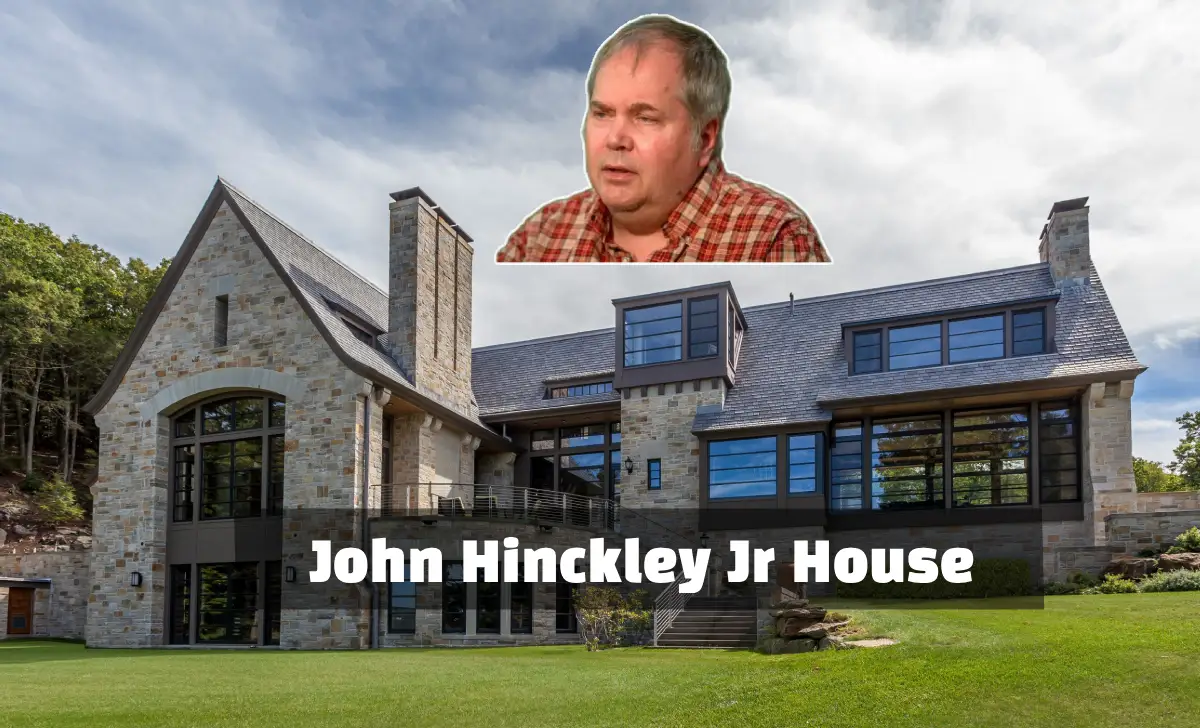
John Hinckley Jr lives in Williamsburg, Virginia, in a modest single-family home that formerly belonged to his late mother. After 35 years in St. Elizabeth’s Hospital, he was granted unconditional release in June 2022, allowing him to reside independently without federal supervision or travel restrictions.
Where John Hinckley Jr Lives Today
John Hinckley Jr house is located in Williamsburg, Virginia, a historic college town roughly 150 miles south of Washington, DC. The residence is a single-family home in a quiet residential neighborhood, purchased by his mother, Jo Ann Hinckley, decades ago. The property sits on a tree-lined street away from the city center, providing privacy while allowing access to community resources.
The home became Hinckley’s primary residence in 2016 when a federal judge granted him conditional release from St. Elizabeth’s Hospital. He had spent 35 years in the psychiatric facility following his 1982 insanity verdict for the attempted assassination of President Ronald Reagan. After his mother died in 2021, Hinckley inherited the property and continues living there today.
Williamsburg was chosen specifically because it offered distance from Washington, DC, where the shooting occurred, while keeping Hinckley close to family support systems. The city’s population of approximately 15,000 residents provided a manageable environment for reintegration without the intense scrutiny of a major metropolitan area.
In June 2022, U.S. District Judge Paul Friedman removed all remaining restrictions on Hinckley’s release, granting him unconditional freedom. This means the John Hinckley Jr house is now his permanent residence without court-ordered supervision, GPS monitoring, or mandatory psychiatric treatment requirements.
- The residence is a single-family home inherited from his mother
- Located in a quiet Williamsburg neighborhood away from downtown
- He gained unconditional release in June 2022 with no federal oversight
- Property provides privacy while allowing community access
The Path to Williamsburg: From Hospital to Home
Hinckley’s journey to his current residence began in 1981 when he shot President Reagan outside the Washington Hilton. The attack also wounded Press Secretary James Brady, Secret Service agent Timothy McCarthy, and police officer Thomas Delahanty. Hinckley was found not guilty by reason of insanity in 1982 and committed to St. Elizabeth’s Hospital in Washington, DC.
For three decades, he remained in full-time institutional care. His legal team began pursuing gradual release privileges in the early 2000s. The court approved supervised day trips in 2003, overnight visits to his parents’ home in 2006, and extended stays by 2013.
In 2016, after an extensive psychiatric evaluation, Judge Friedman ruled that Hinckley no longer posed a danger to himself or others. The decision allowed him to move permanently to the John Hinckley Jr house in Williamsburg under strict conditions. These included GPS monitoring, regular psychiatric appointments, restricted internet use, and a ban on traveling to areas where Reagan family members or Jodie Foster resided.
The release sparked immediate controversy. Victims’ families and some mental health advocates argued 35 years wasn’t sufficient for attempted presidential assassination. Others pointed to psychiatric evidence showing Hinckley’s mental illness was in sustained remission.
From 2016 to 2022, Hinckley lived under federal supervision while gradually earning expanded freedoms. He complied with all treatment requirements and demonstrated stable behavior. This six-year supervised period proved critical to Judge Friedman’s 2022 decision to grant unconditional release.
The court found that continued restrictions served no clinical purpose. Hinckley was 67 years old, had shown no signs of relapse, and psychiatric experts agreed supervision was unnecessary. The ruling allowed him to live freely at the John Hinckley Jr house without government oversight.
- Spent 35 years at St. Elizabeth’s Hospital before 2016, on conditional release
- Six-year supervised period (2016-2022) demonstrated stability
- 202,2 unconditional release removed all federal restrictions
- Decision based on sustained mental health improvement and zero risk assessment
Inside the John Hinckley Jr House
The John Hinckley Jr house is a modest residential property typical of Williamsburg’s suburban neighborhoods. Public records indicate the home is a single-story or split-level structure built in the mid-20th century, sitting on approximately 0.25 to 0.5 acres. The property features a front lawn, rear yard, and standard residential amenities.
The interior layout includes multiple bedrooms, a kitchen, living areas, and a basement or garage space. Hinckley has converted part of the home into a music studio where he records and produces songs. He purchased recording equipment and uses the space to create music, which he shares on YouTube and occasionally performs at small local venues.
Unlike high-security housing for other released offenders, the residence has no special modifications or monitoring equipment. After June 2022, all GPS tracking devices were removed. The home functions as a standard private residence with no restrictions on visitors, internet access, or daily activities.
Neighbors report the property is well-maintained but unremarkable. Hinckley keeps a low profile, maintaining the yard and exterior without drawing attention. The neighborhood consists of middle-class families, retirees, and college-affiliated residents due to Williamsburg’s proximity to William & Mary University.
The home’s value is estimated between $200,000 and $400,000 based on comparable Williamsburg properties. Property taxes and maintenance costs are covered through Hinckley’s inheritance and family resources. He does not receive government assistance for housing.
| Feature | Details |
|---|---|
| Location | Residential neighborhood, Williamsburg, VA |
| Property Type | Single-family home, mid-20th-century construction |
| Size | Standard suburban lot, 0.25-0.5 acres |
| Special Features | Home music studio, no security modifications |
| Ownership | Inherited from mother, privately owned |
| Estimated Value | $200,000-$400,000 |
- Standard suburban home with no special security features
- Includes a personal music studio for recording and production
- Property is maintained quietly without attracting attention
- Owned outright through family inheritance
Release Conditions and Living Restrictions
When Hinckley first moved to the John Hinckley Jr house in 2016, he faced extensive restrictions designed to protect public safety while allowing community reintegration. The court required him to wear a GPS monitoring device at all times, attend regular psychiatric appointments, and obtain permission before traveling outside a 75-mile radius of Williamsburg.
He could not contact the Reagan family members, Jodie Foster, or the victims of the 1981 shooting. Internet use was monitored, and he was prohibited from accessing materials related to the assassination attempt. He could not give media interviews without court approval. A social worker conducted regular home visits to ensure compliance.
These restrictions gradually loosened as Hinckley demonstrated stability. By 2020, travel limits expanded, and internet monitoring decreased. His psychiatric team reported consistent medication compliance, no delusional thinking, and appropriate social behavior.
In June 2022, Judge Friedman lifted all remaining restrictions after reviewing evidence that Hinckley posed no threat. The ruling stated: “The court finds that Mr. Hinckley has been rehabilitated to the point that he no longer poses a danger to himself or others.” This granted him the same freedoms as any U.S. citizen.
Today, Hinckley lives at the John Hinckley Jr house without any legal constraints. He can travel freely, use the internet without monitoring, and make all personal decisions independently. He is not required to attend psychiatric treatment, though he maintains voluntary care. No government agency tracks his location or activities.
This unconditional release remains controversial. Some argue that lifetime supervision should apply to anyone who attempted a presidential assassination. Others point to the psychiatric evidence supporting his rehabilitation and the legal principle that confinement must serve a legitimate purpose.
- 2016-2022: Strict GPS monitoring, travel limits, internet restrictions
- Gradual privilege expansion based on behavioral stability
- June 2022: All restrictions removed after judicial review
- Current status: Complete freedom with no government oversight
Current Life and Activities
Since gaining unconditional freedom, Hinckley has focused on music and art from his Williamsburg residence. He records original songs in his home studio and releases them on YouTube and Spotify. His music style includes folk, rock, and covers of popular songs. He has performed at small venues in Virginia, including a sold-out show in Brooklyn, New York, in July 2022.
His public performances generated significant controversy. Some venues canceled bookings after public backlash, while others defended his right to perform. Hinckley addresses his past openly in interviews, stating he feels remorse for the shooting and understands why people remain uncomfortable with his freedom.
He maintains a social media presence on Twitter and YouTube, where he shares music, artwork, and occasional personal updates. His posts receive mixed reactions, from supportive comments encouraging his artistic pursuits to harsh criticism from those who believe he should remain out of public view.
At the John Hinckley Jr house, he lives alone and manages daily activities independently. He shops locally, attends community events, and maintains a quiet routine. Neighbors report minimal interaction but no concerning behavior. He has reconnected with some family members and maintains a small circle of friends.
Financially, Hinckley supports himself through family inheritance and occasional music sales. He does not work a traditional job but dedicates time to creative projects. His artwork, which he occasionally sells online, includes paintings and drawings created during his hospital stay and after his release.
Mental health professionals who previously treated him state that his condition remains stable. He voluntarily continues some therapeutic support but is not legally required to do so. His case is cited in forensic psychiatry literature as an example of successful rehabilitation following severe mental illness.
- Focuses on music production and performance from a home studio
- Maintains pa ublic social media presence with mixed reactions
- Lives independently with no employment or government assistance
- Mental health remains stable with voluntary therapeutic support
Community Response to Hinckley’s Presence
Williamsburg residents have shown mixed reactions to having John Hinckley Jr house in their community. Some locals express discomfort knowing someone who attempted to kill a president lives nearby. Others believe he has served his time and deserves the chance to reintegrate peacefully.
Local officials have not commented extensively on his presence. The city has no legal authority to restrict where he lives since he faces no court-ordered limitations. Police report no incidents involving Hinckley and note he has complied with all local laws.
Some community members argue his presence could impact property values or create safety concerns. Others counter that psychiatric evidence shows he poses no threat and that stigmatizing mental health treatment discourages rehabilitation efforts.
National reactions to his release remain heated. Victims’ families, particularly those of James Brady, have publicly opposed his freedom. They argue that attempting to assassinate a president should result in permanent confinement regardless of mental health improvement.
Mental health advocates use Hinckley’s case to discuss the purpose of the insanity defense. They argue the legal system should focus on rehabilitation rather than punishment when defendants are found not guilty by reason of insanity. Critics respond that public safety and justice for victims must take priority.
The John Hinckley Jr house itself has not become a site of protest or significant attention. Media occasionally stake out the property during anniversaries of the shooting or when Hinckley makes public appearances, but day-to-day life in the neighborhood remains undisturbed.
- Mixed local response: discomfort from some, acceptance from others
- No legal authority exists to restrict his residence
- National debate continues over appropriateness of his release
- Property itself does not attract significant ongoing attention
Legal Framework Behind His Release
Hinckley’s release from St. Elizabeth’s Hospital and subsequent freedom from all restrictions stem from the insanity defense framework established in federal law. When a defendant is found not guilty by reason of insanity, they are committed to psychiatric treatment rather than prison. Release depends on whether they continue to pose a danger due to mental illness.
The Insanity Defense Reform Act of 1984, passed partly in response to Hinckley’s case, tightened federal insanity defense standards. It requires defendants to prove they could not appreciate the wrongfulness of their actions due to severe mental disease. Before 1984, the burden of proof was lower.
Despite stricter standards going forward, Hinckley’s commitment followed the rules in place at the time of his 1982 trial. His release required proving he no longer suffered from a mental illness that made him dangerous. This standard differs from criminal sentencing, where release depends on completing a fixed term.
From 2003 onward, Hinckley’s legal team presented extensive psychiatric evidence showing his symptoms were in remission. Experts testified that his narcissistic personality disorder and depression were effectively managed and posed no ongoing risk. The government presented opposing expert testimony, but judges ultimately sided with the release recommendations.
The 2016 conditional release and 2022 unconditional release both required Judge Friedman to find that Hinckley no longer met the criteria for continued commitment. The court considered risk assessment tools, treatment compliance records, and expert opinions. The decisions were based strictly on clinical evidence rather than public opinion or the severity of the original crime.
Legal scholars note that Hinckley’s case illustrates both the challenges and intentions of the insanity defense. The system aims to treat mental illness rather than punish defendants who were not legally responsible for their actions. However, high-profile cases create tension between clinical rehabilitation and public safety concerns.
FAQs
Where exactly is John Hinckley Jr’s house located?
The John Hinckley Jr house is in Williamsburg, Virginia. The exact street address is not publicly disclosed for privacy reasons, but it’s in a quiet residential neighborhood.
Does John Hinckley Jr own his home?
Yes, he inherited the Williamsburg property from his mother after she died in 2021. The home is privately owned with no government involvement.
Can John Hinckley Jr travel away from his house?
Yes, since June 2022, he can travel anywhere without restrictions. He previously faced travel limits during his 2016-2022 supervised release period.
Is John Hinckley Jr monitored at his residence?
No, all monitoring ended in June 2022. He lives independently with no GPS tracking, home visits, or government oversight.
Does John Hinckley Jr live alone?
Yes, he lives alone at the residence and manages all daily activities independently without supervision or assistance.
