
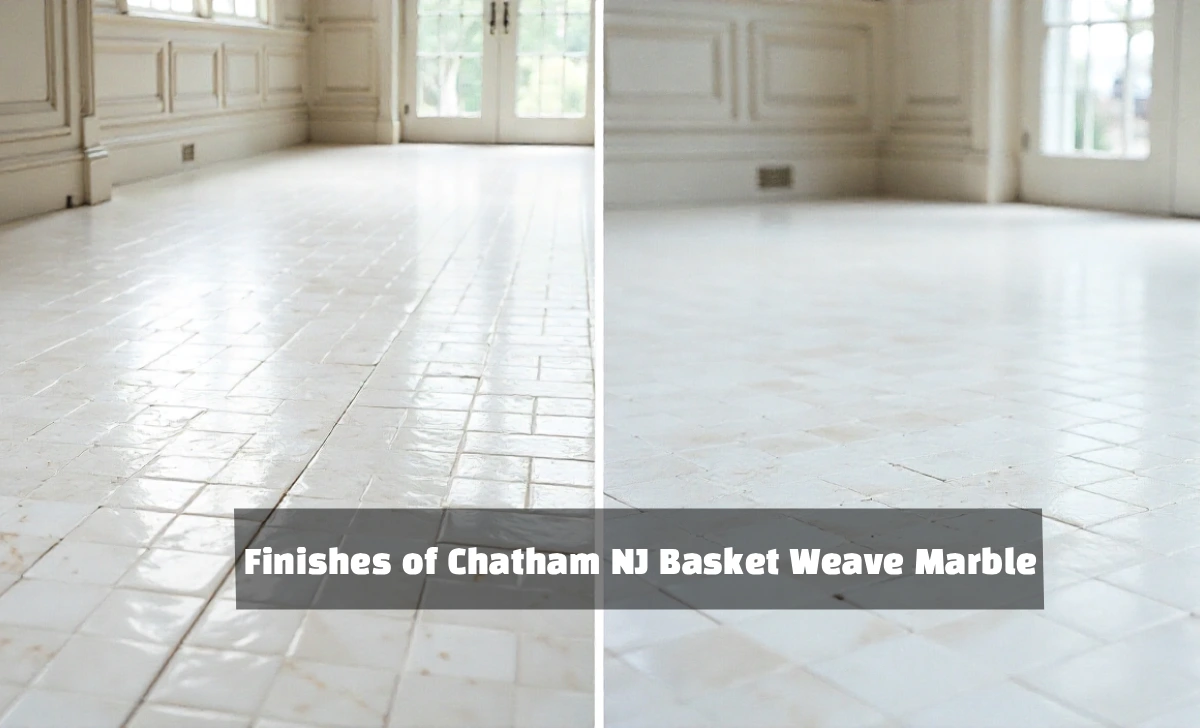
The finishes of Chatham NJ basket weave marble include polished and honed options. Polished finishes deliver mirror-like shine with light reflection, while honed finishes provide smooth, matte surfaces with better traction. Both can be restored through professional diamond grinding, honing, and polishing processes.
Basket weave marble floors appear in many Chatham homes, particularly in entryways and bathrooms. The finish you select affects both appearance and performance. Two primary options exist: polished for high-gloss shine or honed for smooth matte texture. Each serves different needs and design preferences.
What Makes the Basket Weave Pattern Unique
The basket weave design creates visual interest through interlocking rectangular tiles. Small marble strips alternate in perpendicular directions, forming a woven appearance. This classic pattern works in traditional Victorian homes and contemporary spaces alike.
The finishes of Chatham NJ basket weave marble determine how light interacts with the surface. Polished marble reflects like a mirror, showing clear images of surrounding objects. Honed marble absorbs light differently, creating subtle, matte elegance without dramatic reflections.
Quality basket weave installations use tiles measuring approximately 10 millimeters thick. This thickness prevents cracking and ensures longevity. The pattern typically combines primary marble strips with smaller accent dots in contrasting colors.
Polished Finish Characteristics
Polished finishes create crystal-clear reflection through progressive diamond grinding. The process advances from coarse 50-grit to fine 3000-grit diamonds.
Water beads up on properly polished surfaces before absorption. High-gloss appearance closes marble pores, reducing staining compared to honed alternatives.
Reflection quality shows tree branches and furniture outlines in the stone. This clarity requires weighted floor machines and specific polishing compounds. Shortcuts cannot duplicate true, polished finishes.
Polished marble works well in formal entryways where visual impact matters. The dramatic shine creates luxury aesthetics. However, wet surfaces become slippery in bathrooms and high-traffic zones.
Honed Finish Benefits
Honed surfaces offer practical advantages for busy households. The matte appearance provides better traction when wet, safer for bathrooms and showers. Families with children prefer this finish for slip resistance.
The finishes of Chatham NJ basket weave marble in honed style hide wear patterns better than polished versions. Scratches and wear marks show less obviously. Water spots and fingerprints disappear into matte texture.
Honing removes surface material using diamond particles. This process creates a characteristic satin-smooth feel while maintaining natural color and veining.
This finish works well in high-traffic hallways, stair treads, and thresholds. The surface maintains its appearance longer than polish in these locations.
Professional Restoration Process
Basket weave patterns need specialized attention due to the numerous small tiles. Professionals inspect for lippage first, checking where tiles sit unevenly.
Diamond grinding flattens every tile to the same level using metal-bonded grits with weighted machines. This aggressive step eliminates lips and dips between pieces.
Honing follows with progressively finer grits, removing scratches and etch marks. The floor develops initial shine during this phase.
Final polishing uses the finest diamond grits and compounds to reveal marble’s full beauty. Basket weave requires extra care when working with small pieces versus large slabs.
Penetrating sealer completes the process, protecting against water absorption and simplifying maintenance. Reapply annually based on traffic.
Marble Types in Basket Weave Designs
Carrara marble represents the most common Chatham choice. This white stone with gray veining accepts both finishes beautifully. Contrast dots in Bardiglio gray or Nero Marquina black add depth.
Thassos marble provides pure white tones with minimal veining. It pairs well with Ming green or gray dots. Wet polished Thassos requires extra caution due to slipperiness.
Calacatta marble brings dramatic veining with gold or brown undertones. Bold patterns create stunning focal points in either finish, perfect for statement entryways.
Each marble type accepts finishes differently depending on composition. Stone responds variably during restoration work. Technicians must understand mineral content to select appropriate compounds and techniques for best results.
Daily Maintenance Requirements
Use only pH-neutral cleaners designed for marble. Acidic products like vinegar etch surfaces, creating dull spots.
Clean spills immediately. Coffee, wine, and juice penetrate deeper when left sitting, making removal difficult even with sealing.
Entry mats catch dirt and grit before reaching floors. These particles act like sandpaper, gradually dulling finishes through constant abrasion.
Never place hot pans on marble or cut directly without protective boards. These precautions prevent damage requiring professional repair.
When Professional Help Becomes Necessary
Deep scratches and extensive staining need professional equipment and specialized compounds. Overall dullness indicates finish wear requiring restoration.
Significant lippage cannot be fixed through DIY methods. Grinding equipment costs thousands and requires training for safe operation.
Water no longer beading on polished surfaces signals finish degradation. Exposed pores leave stone vulnerable to staining and damage.
The finishes of Chatham NJ basket weave marble benefit from expert assessment when problems arise. Local companies offer free estimates, evaluating the condition and explaining the necessary work.
Choosing Your Ideal Finish
Room function guides selection. Formal entryways showcase polished marble’s impact. Bathrooms need honed safety. Kitchens work with either option.
Maintenance commitment matters. Polished floors show marks but deliver luxury. Honed floors hide wear while needing occasional refinishing.
Consider existing home elements. Matching finishes creates visual flow. Mixing works too: polished in formal areas, honed in casual spaces.
Personal style drives decisions. Some prefer dramatic shine. Others want understated elegance. Choose what fits your lifestyle.
Conclusion
Understanding the finishes of Chatham NJ basket weave marble helps you make informed decisions. Whether choosing polished shine or honed practicality, proper maintenance preserves your investment.
The basket weave pattern adds timeless character through interlocking rectangles. Your chosen finish shows you value quality craftsmanship.
Ready to restore your marble? Get multiple estimates from experienced professionals. Verify they use proper diamond grinding techniques. Your floor deserves expert care.
FAQs
How often should basket-weave marble be resealed?
Apply penetrating sealer once yearly for high-traffic areas, every 18-24 months for moderate use. Test by sprinkling water—if it spreads rather than beads, resealing is needed.
Can I change from honed to polished finish?
Yes, professionals can polish honed marble through progressive diamond grinding and polishing. The process adds shine while maintaining pattern integrity.
What causes lippage in basket weave floors?
Settling foundations, improper installation, or substrate movement create uneven tile heights. Professional grinding levels all tiles to restore flatness.
Do polished or honed finishes cost more?
Initial installation or restoration costs remain similar. Long-term maintenance costs vary more by traffic level than by finish type.
Why avoid acidic cleaners on marble?
Acids react with calcium carbonate in marble, creating etch marks that dull the finish. Always use pH-neutral cleaners designed for natural stone.
