
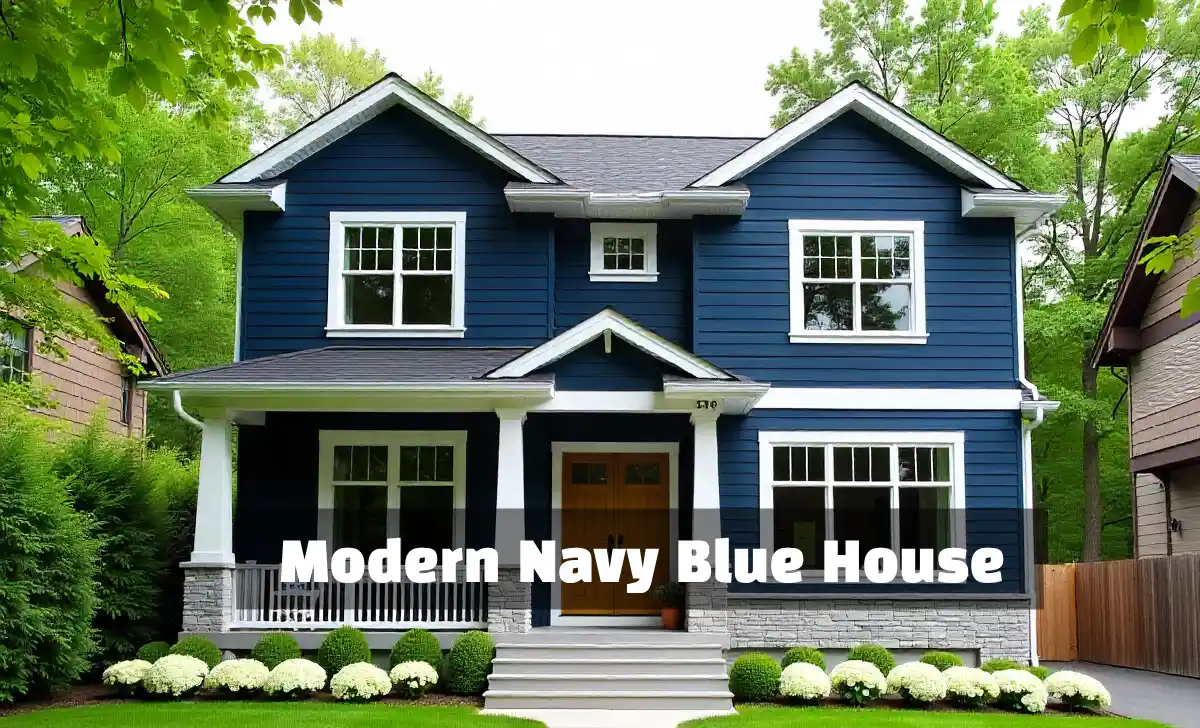
A modern navy blue house creates striking curb appeal with depth and character. This bold choice works across architectural styles, from coastal cottages to contemporary builds, especially when paired with white trim, natural wood accents, or warm metal fixtures for balanced design.
Navy blue has emerged as a top exterior color choice for homeowners seeking sophistication without sacrificing personality. This deep hue transforms ordinary houses into architectural statements while maintaining a timeless appeal that transcends fleeting trends.
Why Navy Blue Works for Modern Homes
Dark exteriors ground a house visually. A modern navy blue house creates presence on any lot while blending naturally with surrounding landscapes. The color reads differently throughout the day—appearing nearly black in shadow, then revealing rich blue undertones in direct sunlight.
Natural wood elements like cedar doors and porch beams complement navy exteriors by adding warmth to balance the cool tone. This pairing works particularly well for farmhouse and rustic designs.
Navy blue hides dirt better than lighter colors, requiring less frequent cleaning. The practical benefits extend beyond maintenance. High-quality exterior paint in navy withstands weather elements while maintaining rich color over time.
Best Navy Blue Paint Colors
Selecting the right shade determines your home’s final appearance. Professional designers rely on specific colors proven through real-world applications.
Benjamin Moore Hale Navy (HC-154)
Hale Navy has an LRV of 6.83, making it unabashedly dark but not reading as black. This straightforward navy contains no tricky undertones, just clean blue with subtle gray notes. The shade works across nearly any architectural style.
Hale Navy pairs exceptionally well with crisp whites like Chantilly Lace or Simply White for trim. The gray undertones prevent the combination from feeling too stark or nautical.
Sherwin-Williams Naval (SW 6244)
Naval has an LRV of 4, making it seriously dark with stunning purple undertones and great depth. This near-black navy creates a dramatic impact on exteriors.
The purple undertones distinguish Naval from other navy options. When paired with natural stone or wood elements, these undertones add richness without appearing too cool.
Alternative Options
Sherwin-Williams Needlepoint Navy offers a lighter approach with more blue visibility. Benjamin Moore Westcott Navy reads slightly more gray than navy but provides classic elegance. For those wanting something between options, Indigo Batik delivers a middle ground.
Design Combinations That Work
Navy blue demands thoughtful pairing with complementary colors and materials.
Trim Colors
White trim creates the strongest contrast. While white remains popular for modern navy blue house trim, other colors like yellowish-green window trim can add a fun personality. For modern designs, paint trim the same navy or choose a shade slightly lighter or darker.
Light gray trim provides contemporary sophistication. Cream or beige creates traditional warmth. Black trim intensifies the modern aesthetic when paired with large windows and clean lines.
Door Colors
Your front door serves as a focal point. Deep navy siding pairs beautifully with bright yellow front doors, creating cheerful focal points. Red doors bring classic Americana charm. Natural wood doors in walnut or cedar tones add organic warmth.
For subtler statements, use navy or dark gray that coordinates with the siding. This approach emphasizes architectural lines rather than creating contrast.
Natural Materials
Stone and brick foundations balance navy siding. Light gray cultured stone provides neutral grounding. Rustic ledge stone adds texture without competing with the bold color.
Wood accents—whether garage doors, porch columns, or decorative beams—introduce essential warmth. Cedar’s rich grain contrasts elegantly with deep navy while maintaining cohesion.
Metal Accents
Copper gutters develop patina over time, adding character. Black fixtures create striking modern statements. Brass and gold hardware introduce subtle glamour at entry points.
Architectural Styles for Navy Blue
Navy blue adapts to diverse design approaches, each producing distinct results.
Modern Farmhouse
Navy siding on lower levels paired with lighter wood siding above creates balanced vertical interest. White trim highlights architectural details. Board and batten siding in navy emphasizes farmhouse character while feeling updated.
Coastal Contemporary
Large windows framed in white or black bring light into spaces while creating geometric interest. A modern navy blue house exterior evokes maritime settings naturally. Pair with stone columns and covered porches for classic coastal charm.
Urban Industrial
Exposed steel beams and large glass panels combine with navy exteriors for bold urban looks. This approach suits city environments where contemporary aesthetics dominate. Raw materials like concrete and metal amplify the industrial feel.
Traditional Colonial
Navy with white trim creates a stately presence on colonial homes. Expansive windows add symmetry and balance, enhancing timeless charm. Detailed molding above entries becomes more prominent against dark backgrounds.
Maintenance Requirements
Navy blue siding needs regular care to maintain appearance and longevity.
Cleaning Schedule
Blue siding should be cleaned at least once yearly using a hose or pressure washer on a low setting. This removes accumulated dirt, grime, and mildew. Shaded areas may require more frequent attention.
For general cleaning, mix mild dish soap or laundry detergent with water. Apply with a soft-bristle brush, working from bottom to top. Rinse thoroughly before the solution dries to prevent streaking.
Mildew Prevention
Dark colors in humid climates can develop mildew in shaded spots. A solution of 30% vinegar and 70% water proves successful for larger mildew sections. For small spots, household cleaners like Fantastik or Windex work effectively.
Apply cleaning solution, scrub gently, then rinse completely. Never allow cleaners to dry on the siding surface.
Long-Term Care
Inspect siding after severe weather for damage. Trim trees and plants regularly to prevent damage from branches or vines. Keep vegetation away from siding to improve air circulation and reduce moisture accumulation.
Avoid placing heat sources like grills too close to vinyl siding, as high temperatures can cause warping. Check weep holes and drainage lines during rainy seasons to prevent moisture intrusion.
Common Design Mistakes
Understanding pitfalls helps achieve better results.
Insufficient Contrast
Navy siding with dark trim and dark doors creates visual monotony. Homes need contrast points to highlight architectural features. Introduce at least one lighter element—trim, doors, or stone accents.
Ignoring Light Exposure
North-facing sides appear darker than south-facing walls. Test paint samples on different exposures throughout the day. What looks perfect in morning light may appear too dark by afternoon.
Overwhelming Small Homes
Navy blue adds depth and character to small houses, especially when paired with bright trims and vibrant landscaping. The key lies in proportion—use lighter colors on larger surface areas to prevent small homes from feeling heavy.
Poor Material Quality
Cheap paint fades quickly, turning navy gray or dull blue. Invest in high-quality exterior paint with fade-resistant properties. Premium products maintain color saturation for years, protecting your investment.
Installation Considerations
Professional installation ensures optimal results and longevity.
Material Selection
Vinyl siding offers affordability and low maintenance. Choose products with high-quality, fade-resistant finishes to preserve the navy color. Fiber cement siding provides superior durability and weather resistance. This material withstands extreme temperatures and high humidity better than alternatives.
James Hardie siding in navy blue combines durability with color retention. The material resists warping, cracking, and fading while requiring minimal upkeep.
Climate Factors
Dark colors absorb heat. In hot climates, a modern navy blue house can become extremely warm to the touch, potentially affecting cooling costs. Consider insulated siding options or lighter navy shades in areas with intense sun exposure.
Cold-climate homeowners benefit from heat absorption. The dark color helps snow melt faster from surfaces while providing subtle energy efficiency gains during the winter months.
Professional vs. DIY
Exterior painting requires specific expertise. Professional painters ensure proper surface preparation, primer application, and even coating. They understand how to handle corners, trim work, and texture variations.
DIY projects save money upfront but risk uneven application and premature failure. If attempting yourself, invest in quality brushes, rollers, and proper primer. Follow manufacturer instructions precisely for the best results.
Landscaping to Complement Navy Blue
Strategic landscaping enhances navy exteriors significantly.
Plant Selection
Light-colored flowering plants create a stunning contrast. White hydrangeas, yellow roses, and pink peonies pop against navy backgrounds. Green foliage appears more vibrant when framed by dark siding.
Ornamental grasses add movement and texture. Their feathery plumes soften the bold color while requiring minimal maintenance. Choose varieties with wheat or silver tones for maximum contrast.
Hardscaping Elements
Natural stone pathways in light gray or beige lead eyes toward entry points. Avoid dark pavers that blend too closely with siding color. White or cream-colored planters create focal points near doorways.
Outdoor lighting becomes crucial with dark exteriors. Uplighting highlights architectural features while downlighting creates welcoming entry zones. Warm-toned LED fixtures complement navy better than cool white options.
Frequently Asked Questions
Does navy blue siding increase home value?
Bold, well-executed color choices improve curb appeal, potentially increasing resale value. Navy blue stands out in neighborhoods dominated by neutrals while maintaining a sophisticated appearance that buyers appreciate.
How long does navy blue paint last on exteriors?
High-quality exterior paint lasts 10-15 years with proper maintenance. Fade-resistant formulations extend this timeline. Regular cleaning and prompt repairs preserve color integrity longer.
Can you paint over existing siding in navy blue?
Yes, with proper preparation. Clean surfaces thoroughly, repair damage, apply appropriate primer, then use high-quality exterior paint. Consult professionals for vinyl siding painting to avoid warping issues.
What roof colors work with navy blue houses?
Black, charcoal gray, and dark brown roofs create classic combinations. Lighter gray roofs provide a softer contrast. Avoid roofs with strong red or orange undertones that clash with cool navy.
Is navy blue too bold for resale?
Navy blue has gained mainstream acceptance as a sophisticated neutral. When executed properly with complementary trim and accents, it appeals to buyers seeking character without extreme risk.
A modern navy blue house delivers striking visual impact while offering practical benefits. The color works across architectural styles, climates, and lot sizes when paired thoughtfully with complementary elements. Quality materials, professional installation, and regular maintenance ensure your modern navy blue house maintains its beauty for decades.
