
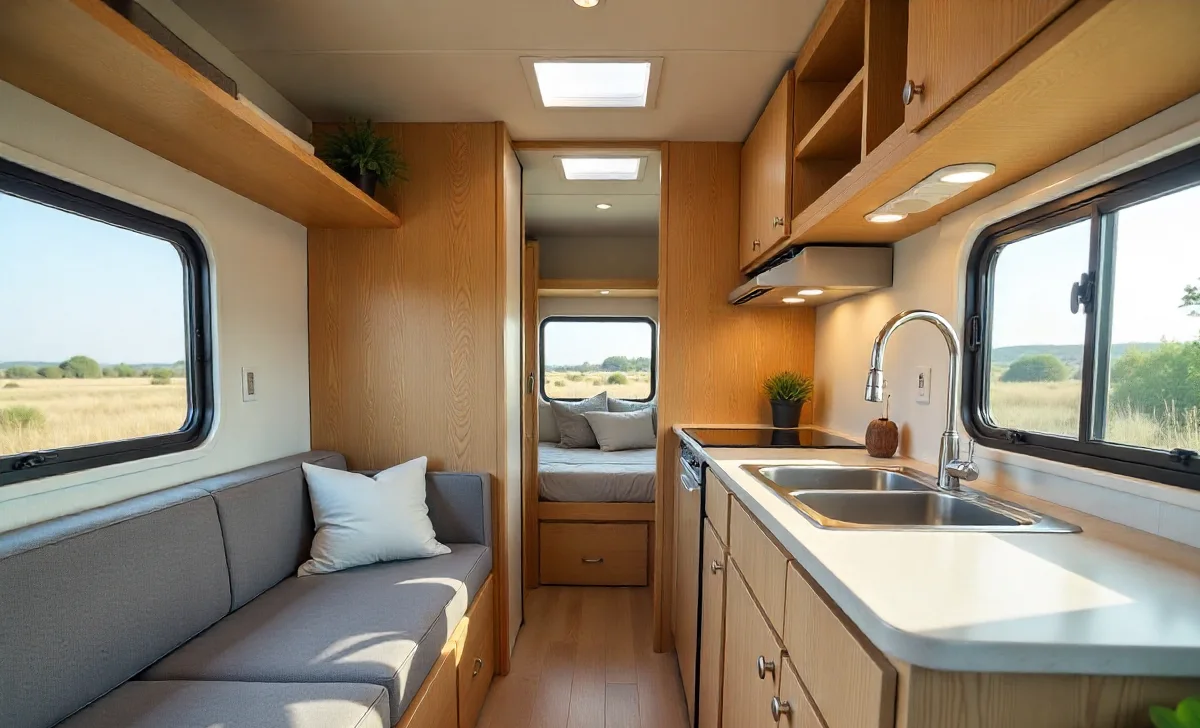
Long-haul truckers spend weeks away from home. The 2 bedroom super sleeper truck interior changes that reality by turning commercial vehicles into mobile residences. These aren’t basic sleeper cabs with bunk beds. They’re custom-built living spaces that extend up to 240 inches, offering everything from full kitchens to private bathrooms.
Understanding Super Sleeper Truck Design
A super sleeper refers to heavy-duty commercial trucks with extended cab compartments. Standard sleeper trucks provide minimal space—just enough for a bed and basic storage. The 2 bedroom super sleeper truck interior takes this concept further by adding dual sleeping quarters, functional living areas, and residential amenities.
These sleepers can extend up to 240 inches in length, with a total wheelbase of approximately 378 inches. Manufacturers like Freightliner, Kenworth, and Peterbilt lead the market, offering extensive customization options for drivers who demand more than basic accommodations.
Core Features That Define These Mobile Homes
Dual Sleeping Quarters
The primary bedroom typically features a queen-size mattress with premium bedding. Soundproof walls and adjustable lighting create a restful environment isolated from road noise. The second sleeping area provides privacy for team drivers or serves as a multipurpose space for work and relaxation.
Windows with blackout curtains line both sides. Overhead storage cabinets maximize vertical space without creating a cramped feel. Memory foam mattresses and climate control systems ensure quality rest after long drives.
Kitchen Setup
The 2 bedroom super sleeper truck interior includes a fully equipped kitchen despite its compact footprint. Standard appliances include:
- Microwave or convection oven
- Two-burner propane or induction cooktop
- Full-size or mini refrigerator with freezer
- Stainless steel sink with running water
- Ventilation fan for cooking exhaust
Cabinet space stores cookware, dishes, and dry goods. Some drivers add air fryers or pressure cookers. This setup eliminates the need for constant diner stops, allowing drivers to prepare healthy meals and save money on the road.
Bathroom Facilities
A complete bathroom separates super sleepers from standard cabs. These include a shower with a handheld sprayer, a modern toilet, and a vanity sink. Moisture-resistant materials prevent water damage. Proper ventilation systems keep humidity under control.
This bathroom inclusion makes traveling more convenient since drivers don’t have to rely on public rest stops. The self-sufficiency factor becomes critical during long hauls through remote areas with limited facilities.
Living and Entertainment Space
The central living area functions as multiple rooms. A mounted flat-screen TV provides entertainment during downtime. Some setups include gaming systems or streaming devices. Foldable dining tables convert the space for meals or laptop work.
Comfortable seating—often a small couch or recliner—allows drivers to relax without climbing into bed. USB charging ports and power outlets support modern electronics. LED lighting adjusts from bright task lighting to dim ambient settings.
Investment Analysis: Costs and Returns
Prices generally range between $150,000 and $250,000, with differences attributed to brands, features, and customization options. Super sleepers start over $200,000 and can reach $600,000 at the top end of customization.
The upfront cost seems steep, but the financial benefits accumulate:
Daily Savings
- Hotel stays: $80-150 per night eliminated
- Restaurant meals: $40-60 daily reduced
- Shower facilities: $12-15 per stop avoided
Over a year, these savings reach $30,000-50,000 for full-time drivers. The 2 bedroom super sleeper truck interior pays for itself within 4-6 years of continuous operation.
Operational Benefits: Teams can alternate driving shifts without stopping for rest breaks. This keeps trucks moving 20+ hours daily, increasing revenue potential. Compliance with rest period regulations becomes easier when drivers have comfortable sleeping quarters.
Who Benefits Most from Super Sleepers?
Team Drivers
Two-person driving teams maximize the dual bedroom design. Each driver gets a private sleeping space while the other operates the vehicle. This setup maintains productivity without sacrificing personal space or privacy.
Owner-Operators on Extended Routes
Drivers who spend 250+ days annually on the road see the greatest value. The ability to cook meals, shower, and relax in a personal space reduces physical and mental fatigue. Better rest translates to safer driving and longer careers.
Family Operations
Some trucking families travel together. The 2 bedroom super sleeper truck interior accommodates couples or even allows children to join for periods. Custom builds can include classroom spaces for homeschooling or dedicated work areas.
Drawbacks to Consider
Fuel Efficiency The extended cab adds 2,000-4,000 pounds to the truck’s weight. This reduces fuel economy by 0.5-1.5 mpg compared to standard sleepers. Annual fuel costs increase by $3,000-6,000, depending on mileage and diesel prices.
Maintenance Complexity: More systems mean more potential issues. Plumbing, electrical, and HVAC components require specialized maintenance. Finding qualified technicians in remote areas can delay repairs.
Parking Challenge: The largest sleeper built by ARI measured 268 inches. These extended wheelbase trucks struggle with tight truck stops and loading docks. Drivers must plan routes carefully and arrive early to secure adequate parking.
Customization Options and Upgrades
Buyers can specify nearly every detail. Popular upgrades include:
- Solar panels for auxiliary power
- Washer-dryer combinations
- Upgraded audio systems
- Smart home controls for lighting and climate
- Extra water tanks for extended showers
- Under-bed storage with hydraulic lifts
Custom sleeper additions can take six weeks to three months to complete. Some dealers stock pre-built units for faster acquisition, while others work from scratch based on driver specifications.
Top Manufacturers and Models
Kenworth and Peterbilt, both Paccar brands, offer factory integration with custom sleeper companies. Their trucks handle the extra weight well and maintain resale value. Dealers provide nationwide service networks.
Freightliner and Volvo. These brands focus on aerodynamic designs that partially offset fuel economy losses. Their partnership with ARI Legacy Sleepers produces turnkey solutions with predictable timelines.
Western Star Known for rugged construction, Western Star trucks suit heavy haul operations where power matters more than fuel economy. Their extended frames accommodate the longest sleepers available.
Making the Decision
The 2 bedroom super sleeper truck interior represents a major investment in driver comfort and operational flexibility. It makes sense for:
- Drivers spending 200+ nights annually on the road
- Team operations requiring continuous movement
- Owner-operators prioritizing long-term health
- Family operations needing a mobile living space
Calculate your annual hotel and meal expenses. If these exceed $25,000, a super sleeper begins paying for itself through eliminated costs. Add the productivity gains from reduced stops and increased driving hours, and the financial case strengthens.
Consider financing options carefully. Interest on $200,000+ loans adds substantially to total costs. Some drivers start with used super sleeper trucks in the $130,000-185,000 range to reduce initial capital requirements.
The modern trucking lifestyle demands more than basic accommodations. Drivers who treat their truck as a home rather than just a workplace report higher job satisfaction, better health outcomes, and longer careers. The 2-bedroom super sleeper truck interior transforms long-haul trucking from an endurance test into a sustainable lifestyle choice.
